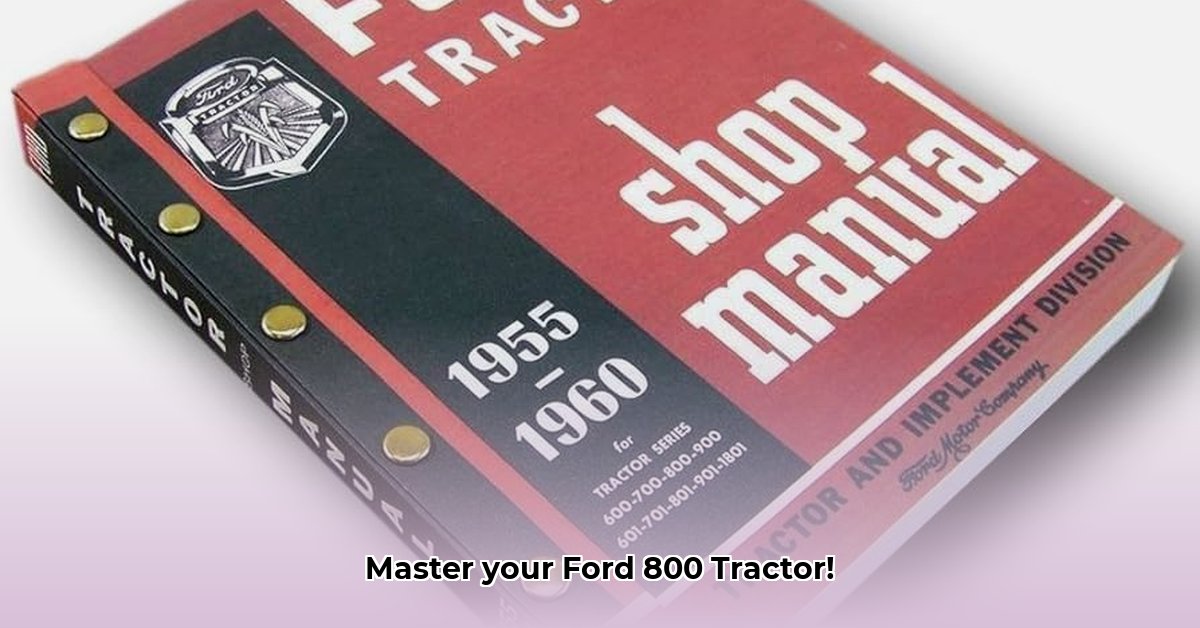
This comprehensive guide provides essential information for operating and maintaining your Ford 800 tractor. Whether you're a seasoned farmer or a new owner, this resource will help you maximize your tractor's performance and longevity. We'll cover pre-operation checks, safe operation procedures, regular maintenance schedules, troubleshooting common problems, and sourcing replacement parts. For electrical troubleshooting, check out this wiring diagram.
Pre-Operation Checks: Ensuring a Safe Start
Before starting your Ford 800, perform these crucial checks to prevent potential issues and ensure safe operation:
Fluid Levels: Check engine oil, transmission fluid, hydraulic fluid, and coolant levels using the dipsticks. Add the correct fluids as needed, referring to your owner's manual for specifications. Using incorrect fluids can cause significant damage.
Belt and Hose Inspection: Visually inspect all belts and hoses for cracks, wear, or leaks. Replace any damaged components immediately to prevent unexpected breakdowns.
Tire Pressure: Verify tire pressure using a reliable gauge. Maintain proper inflation for optimal traction, fuel efficiency, and tire longevity. Consult your owner's manual for recommended pressure.
Brake Test: Depress the brake pedal several times to ensure proper engagement. Faulty brakes pose a significant safety risk.
Power Take-Off (PTO) Check: If using implements, ensure the PTO engages and disengages smoothly. Refer to your owner's manual for specific testing procedures.
Implement Inspection: Before attaching any implements, inspect them for damage or loose connections. Ensure secure attachment to prevent accidents or malfunctions.
These pre-operation checks are critical for preventing costly repairs and ensuring operator safety. Taking a few minutes to perform these steps can save you significant time and money in the long run.
Operation: Driving and Utilizing Your Ford 800
Starting your Ford 800 is typically straightforward. However, always consult your owner's manual for the precise starting procedure for your specific model. Ensure the tractor is in neutral before starting the engine.
Transmission Operation: Mastering the Gears
Your Ford 800 likely features a manual transmission, possibly a 4-speed, 5-speed, or a Select-O-Speed system. Understanding the gear ratios and proper shifting techniques is essential for efficient operation. Practice smooth shifting to minimize wear and tear on the transmission.
Attaching and Operating Implements: Safety First
Attaching implements requires attention to detail and safety. Always ensure all connections are secure before operation. Never force connections; if something feels wrong, consult your owner's manual. Refer to individual implement manuals for specific operating instructions. Did you know that improper implement attachment accounts for a significant percentage of farm accidents?
Driving Techniques: Safe and Efficient Operation
While driving, maintain awareness of your surroundings. Adhere to traffic laws, maintain a safe speed, and be mindful of obstacles. Remember, safe driving habits protect you and your equipment.
Maintenance: A Proactive Approach to Longevity
Regular maintenance is vital for preventing costly repairs and extending the lifespan of your Ford 800. Your owner's manual provides a detailed maintenance schedule typically based on operating hours.
Regular Maintenance Schedule: A Preventive Strategy
The following table highlights key maintenance tasks and their recommended frequency (approximate hours):
| Maintenance Item | Frequency (Approximate Hours) | Notes |
|---|---|---|
| Engine Oil Change | 50, 200, 600, 1200 | Use the correct oil type and grade specified in your manual. |
| Oil Filter Replacement | 50, 200, 600, 1200 | Essential for engine cleanliness and preventing wear. |
| Air Filter Cleaning/Replacement | 50, 200, 600 | A clean air filter ensures optimal engine performance. |
| Fuel Filter Replacement | 200, 600, 1200 | Prevents contaminants from reaching the fuel system. |
| Lubrication (Grease fittings) | 50, 200, 600, 1200 | Refer to your manual's lubrication chart. |
| Tire Pressure Check | Regularly (Before each use) | Proper inflation is crucial for optimal performance and tire life. |
This schedule represents a general guideline. Your Ford 800's owner's manual contains a complete and accurate schedule tailored to your specific model. Adherence to this schedule significantly reduces the likelihood of major repairs.
Troubleshooting: Addressing Common Issues
Even with diligent maintenance, problems can arise. Your owner's manual provides detailed troubleshooting guidance.
Common Problems and Solutions: Quick Fixes
| Problem | Possible Causes | Suggested Solutions |
|---|---|---|
| Difficult Starting | Low battery, fuel problems, dirty air filter | Check battery, examine fuel lines, replace air filter. |
| Transmission Problems | Low transmission fluid, worn clutch components | Check fluid levels, consult a qualified mechanic. |
| Hydraulic Leaks | Hose failure, worn seals, failing hydraulic pump | Inspect hoses and seals, replace faulty components. |
| PTO Not Engaging | Mechanical issue, incorrect engagement procedure | Check the PTO mechanism and refer to the manual. |
For complex issues, seeking professional assistance is recommended. Improper repairs can lead to further damage and safety hazards.
Parts Sourcing: Locating Replacement Parts
Finding parts for older tractors can require some effort. Here are some options:
- Ford Dealerships: Contact your local Ford dealership for original or equivalent parts.
- Online Retailers: Online retailers specialize in parts for vintage agricultural equipment.
- Restoration Communities: Online forums and communities focused on vintage tractors can provide valuable resources and parts leads. These communities often have members who have overcome similar challenges.
When ordering parts, always verify part numbers using your owner's manual to ensure compatibility.
This guide serves as a valuable supplement to your Ford 800 owner's manual. Remember, preventative maintenance and safe operating practices are crucial for maximizing the lifespan and performance of your tractor.